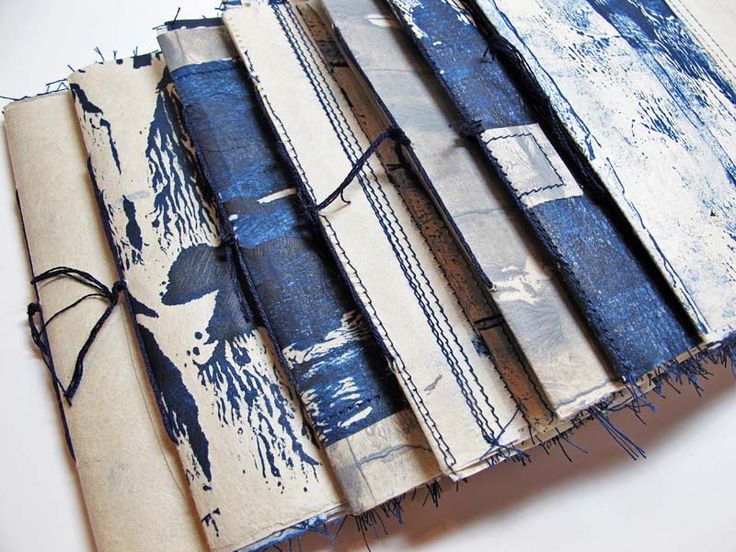
My first book, Crafting Feminism from Literary Modernism to the Multimedia Present, was published by Oxford University Press in 2022 (2023 in the U.S.)–and was just re-released as a paperback edition.
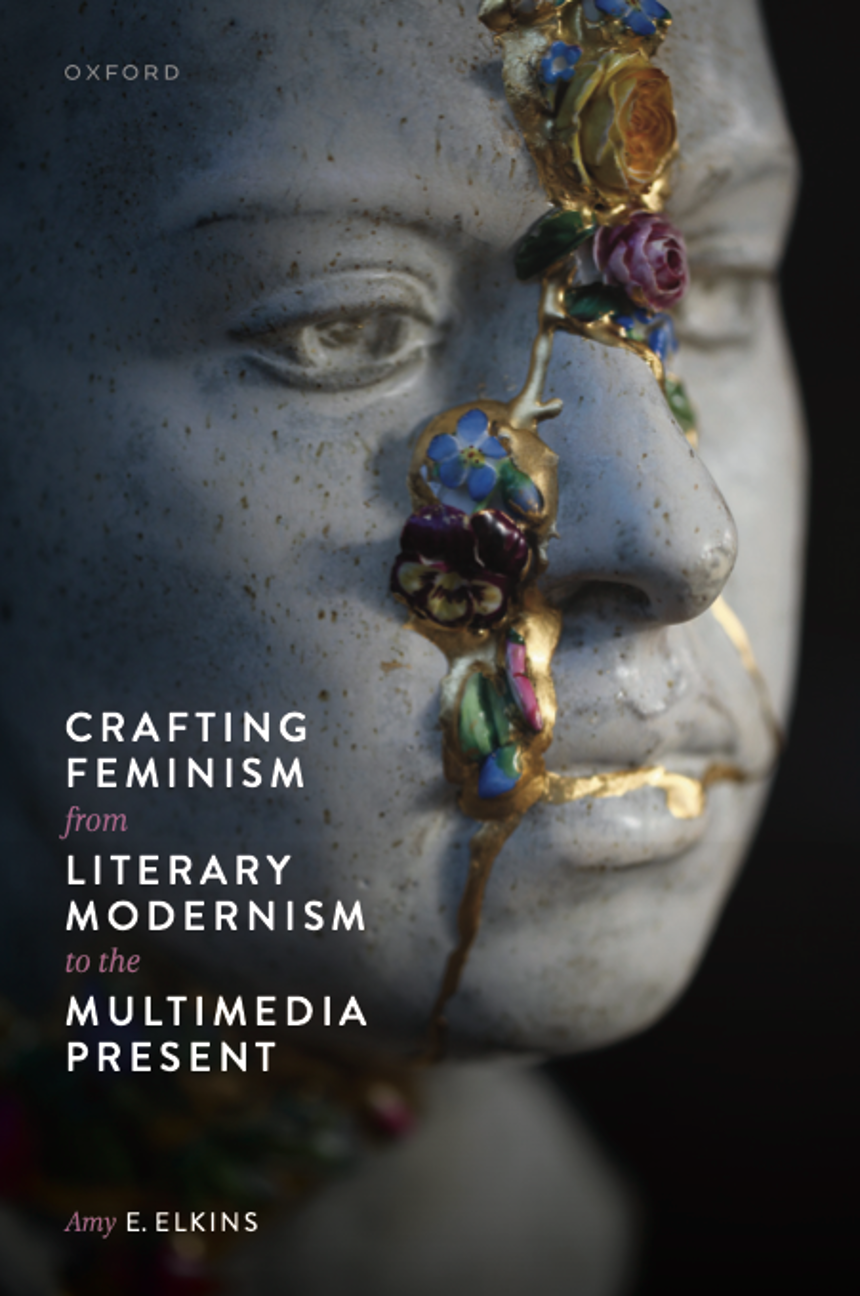
This book focuses on how writers recover, reposition, and repurpose craft materials and processes from photography and needlework to painting, collage, and digital making. Craft offers the ability to hold several things in sight at once, revealing the complexity of material objects, multimedia, art history, and visual cultures—with a focus on how these encounters underpin narratives of survival and resistance in texts by Virginia Woolf, H.D. (Hilda Doolittle), Lorna Goodison, Ali Smith, Zadie Smith, and others. Described as “one of the most daring and joyful academic monographs you will ever encounter”–my research seeks to open new space for methodological depth and creative joy in academic scholarship.
I’m currently working on two new projects: the first, Oblique Strategies in the Archive, uses the space of the institutional archive as an experimental laboratory for new approaches to creative-critical research in the humanities. Using the intersection of literary studies and art/craft history, this project demonstrates the value of research-creation, counter-archives, collaboration, and creative-critical fabulation (a form of scholarly storytelling) to more inclusive models of higher education and humanities research. Oblique Strategies in the Archive, and its accompanying exhibition, will show how profound exchanges of creativity and scholarly praxis emerge from important, understudied archives while outlining timely methodological approaches that include play, erasure, intuition, glitchiness, care, bricolage, storytelling, craft, fragments, embodiment, tactility, genre-bending, failure, ceremony, provocations, and video poetics. As an updated roadmap for humanities research, this project intersects with the urgency of our current moment—when showing the value of reading, learning, and creative-critical expression matters more than ever.
Second, I’m interested in eco-intersectionality and theories of wellbeing and cognition in modernist and contemporary literature and visual culture. “Bath Studies” takes up the intersection of creative practices of flow, queer fluidity, and flux in and around geothermal sites and spas/baths. Building on my first book’s study of queer community, healing and repair, and affect, I read these warm water sites as historically — and ecologically — linked to theories of wellness-as-resistance in modernism and its afterlives. This project so far takes the shape of a public-facing book that weaves together autotheory, literature, and popular visual culture and an art book of Polaroid emulsion lifts (an alternative process that uses a warm-water bath) of photographs taken of (or below!) water at my various research sites.
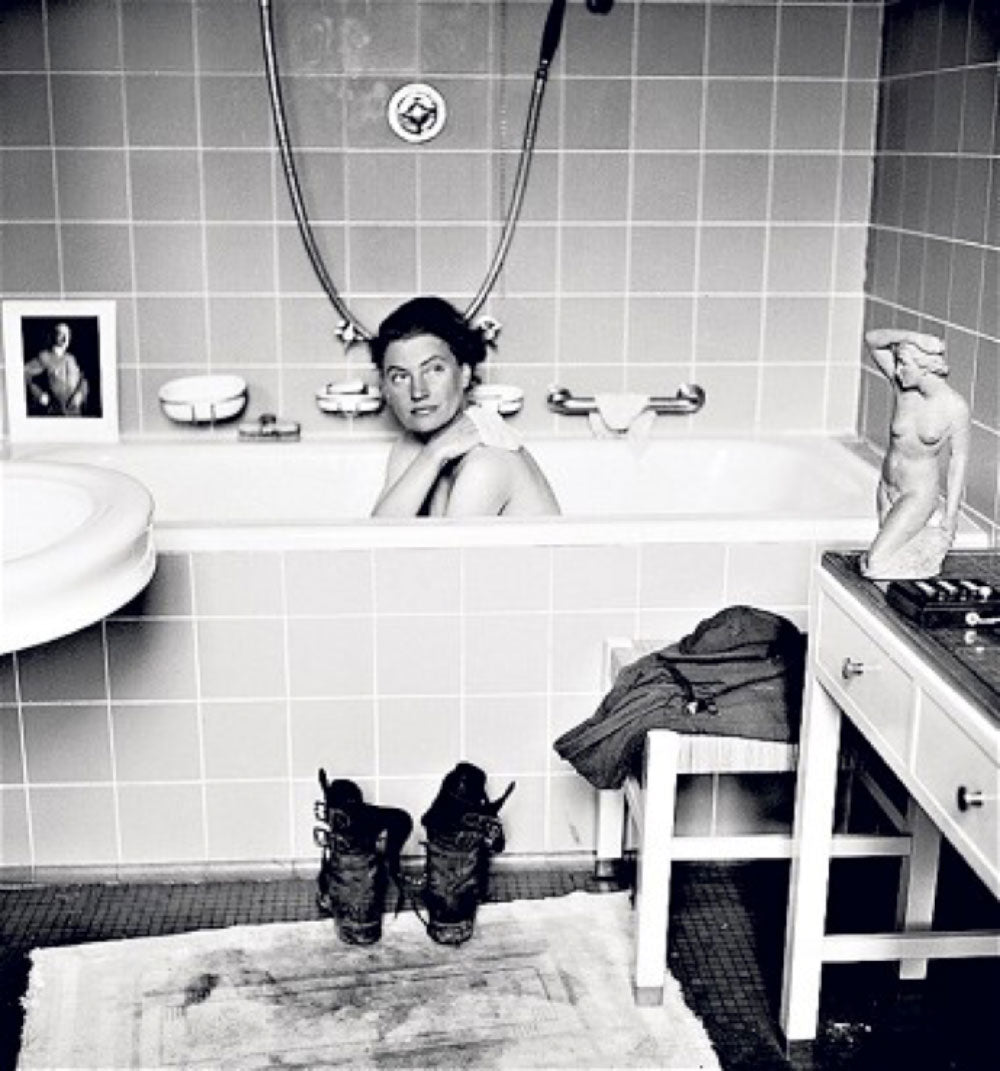
Image: Lee Miller in Hitler’s bathtub, 1945
 AMY E. ELKINS
You must be logged in to post a comment.